

Understanding and Calculating Your BMI
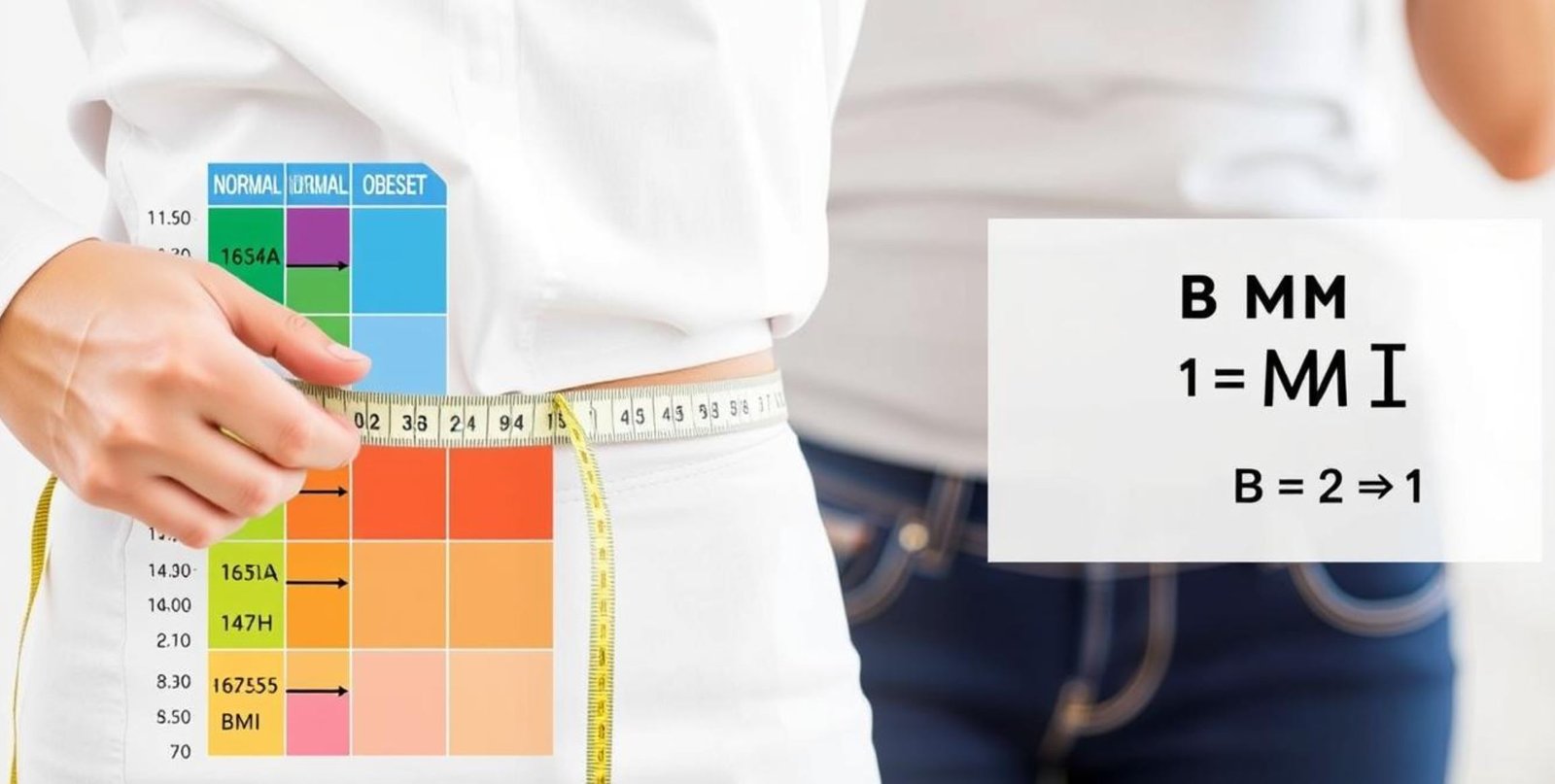
Body Mass Index (BMI) is a numerical value calculated from your weight and height. It provides a simple way to categorize whether you’re at a healthy weight, underweight, or overweight. While BMI doesn’t directly measure body fat, it offers a reasonable indicator for most people and serves as a starting point for weight management.
How to Calculate Your BMI
Metric Formula
BMI = Weight (kg) / Height² (m²)
Example: If you weigh 70 kg and are 1.75 m tall:
BMI = 70 / (1.75 × 1.75) = 70 / 3.0625 = 22.86
Imperial Formula
BMI = (Weight (lbs) × 703) / Height² (inches²)
Example: If you weigh 154 lbs and are 5’9″ (69 inches) tall:
BMI = (154 × 703) / (69 × 69) = 108,262 / 4,761 = 22.74
Calculate Your BMI Now
Use our interactive BMI calculator to quickly determine your Body Mass Index and understand what it means for your health.
BMI Categories and What They Mean
| BMI Range | Weight Category | Health Implications |
| Below 18.5 | Underweight | Potential nutritional deficiencies, weakened immune system |
| 18.5 – 24.9 | Normal weight | Generally associated with good health |
| 25.0 – 29.9 | Overweight | Increased risk of heart disease, diabetes |
| 30.0 and above | Obese | Higher risk of serious health conditions |
Important: BMI is a screening tool, not a diagnostic tool. It doesn’t account for factors like muscle mass, bone density, or fat distribution. Athletes with high muscle mass may have a high BMI without excess fat. Always consult with a healthcare professional for a comprehensive health assessment.
Calculating Your Daily Calorie Needs

Understanding your daily calorie needs is crucial for effective weight management. Your body requires a specific amount of energy (calories) to maintain basic functions and support your activity level. This baseline is known as your Total Daily Energy Expenditure (TDEE).
The Harris-Benedict Equation for Basal Metabolic Rate (BMR)
The first step is calculating your Basal Metabolic Rate (BMR), which represents the calories your body needs at complete rest. The Harris-Benedict equation is commonly used:
For Men:
BMR = 88.362 + (13.397 × weight in kg) + (4.799 × height in cm) – (5.677 × age in years)
For Women:
BMR = 447.593 + (9.247 × weight in kg) + (3.098 × height in cm) – (4.330 × age in years)
Calculating Total Daily Energy Expenditure (TDEE)
To find your TDEE, multiply your BMR by an activity factor:
- Sedentary (little or no exercise): BMR × 1.2
- Lightly active (light exercise 1-3 days/week): BMR × 1.375
- Moderately active (moderate exercise 3-5 days/week): BMR × 1.55
- Very active (hard exercise 6-7 days/week): BMR × 1.725
- Extremely active (very hard exercise & physical job): BMR × 1.9
Adjusting Calories for Your Weight Goals
For Weight Loss
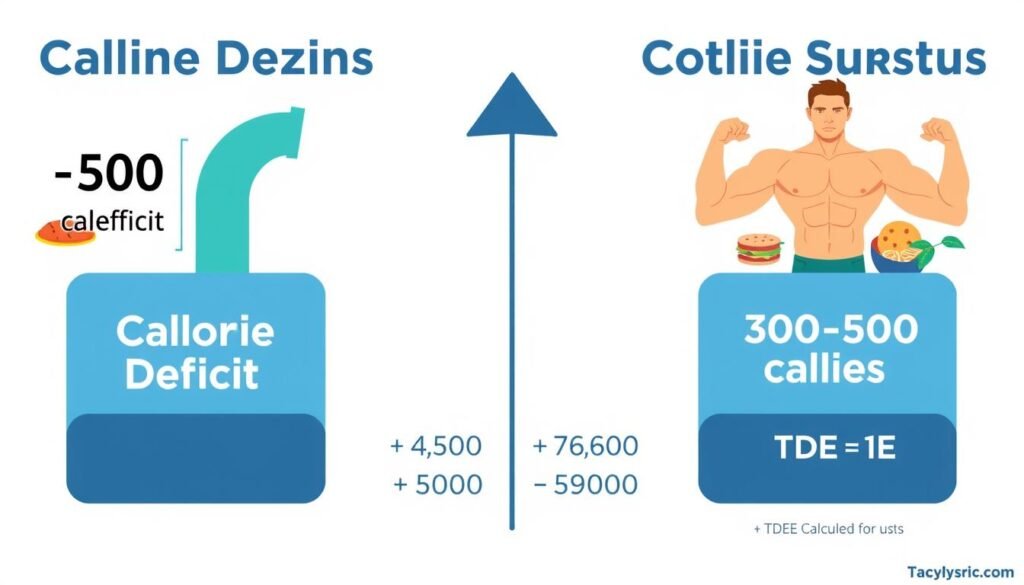
Create a calorie deficit by consuming fewer calories than your TDEE:
- Mild weight loss (0.5 lb/week): TDEE – 250 calories
- Moderate weight loss (1 lb/week): TDEE – 500 calories
- Aggressive weight loss (2 lbs/week): TDEE – 1000 calories
Note: Never go below 1,200 calories for women or 1,500 calories for men to ensure nutritional adequacy.
For Weight Maintenance
Consume calories equal to your TDEE:
- Monitor your weight weekly
- Adjust intake if you notice unintended changes
- Remember that TDEE can fluctuate with changes in activity level
Weight maintenance is ideal for those who have reached their goal weight or are at a healthy BMI.
For Weight Gain
Create a calorie surplus by consuming more calories than your TDEE:
- Lean muscle gain: TDEE + 300-500 calories
- Focus on protein intake (1.6-2.2g per kg of body weight)
- Combine with strength training for optimal results
This approach is ideal for those who are underweight or athletes looking to build muscle mass.
Calculate Your Daily Calorie Needs
Use our comprehensive calorie calculator to determine your exact daily calorie needs based on your age, weight, height, gender, and activity level.
Strategic Meal Planning for Your Weight Goals
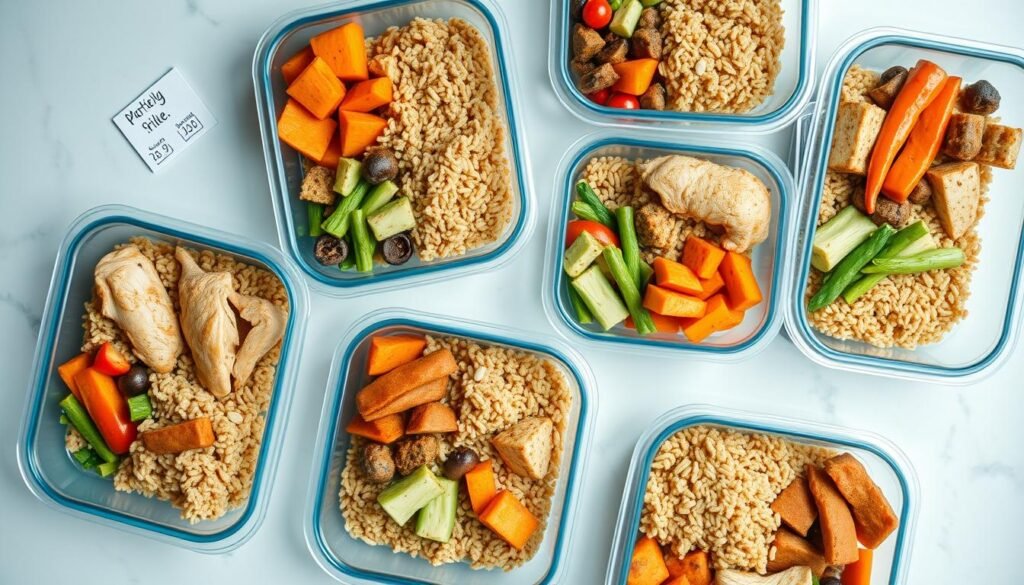
Once you’ve calculated your BMI and determined your daily calorie needs, the next step is creating a strategic meal plan. How you distribute your calories throughout the day can significantly impact your energy levels, hunger management, and overall success in reaching your weight goals.
Understanding Macronutrient Balance
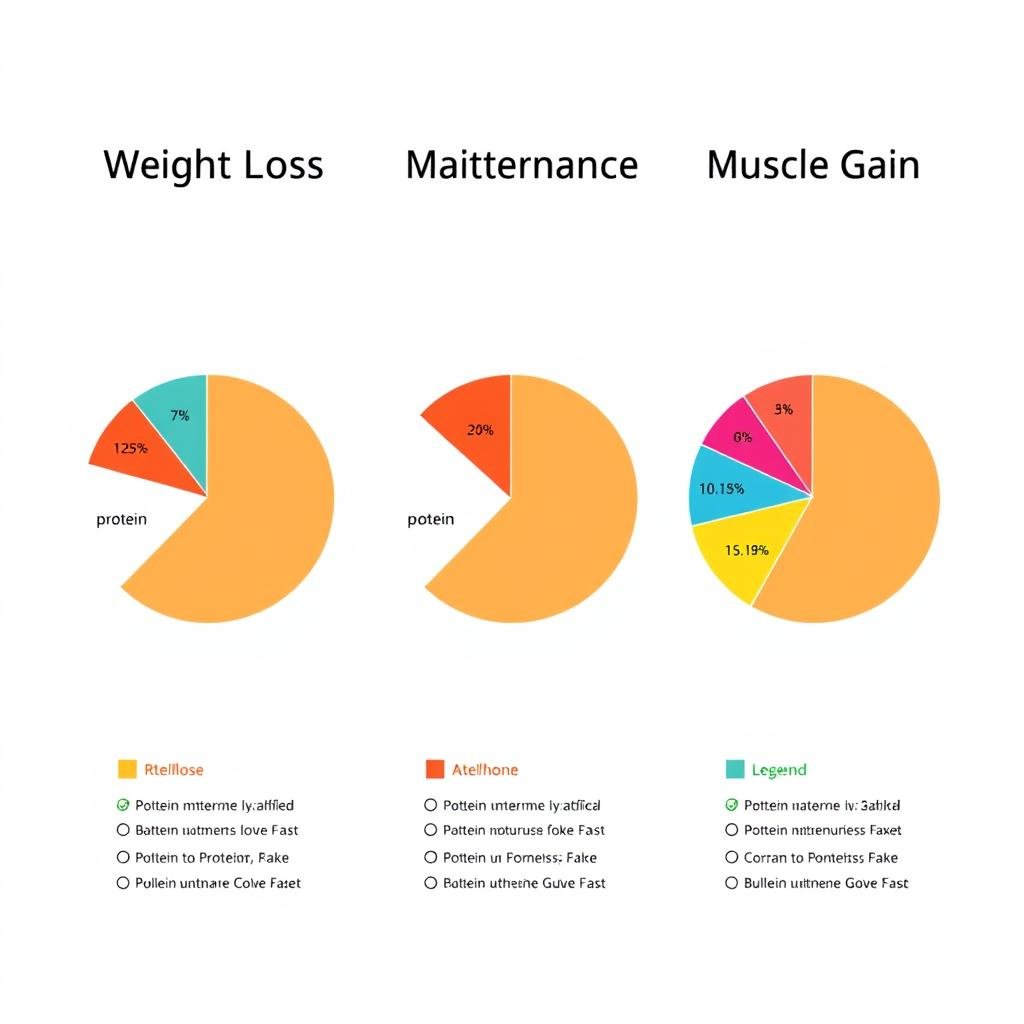
Calories come from three macronutrients: proteins, carbohydrates, and fats. Each plays a vital role in your body’s function and should be balanced according to your goals:
| Macronutrient | Calories per gram | Weight Loss Ratio | Maintenance Ratio | Muscle Gain Ratio | Key Functions |
| Protein | 4 | 30-40% | 20-30% | 25-35% | Muscle repair, enzyme production, satiety |
| Carbohydrates | 4 | 20-30% | 45-55% | 40-60% | Energy, brain function, fiber for digestion |
| Fats | 9 | 30-35% | 25-35% | 15-25% | Hormone production, vitamin absorption, cell structure |
Meal Frequency and Timing Strategies
Traditional Approach: 5-6 Small Meals
Eating smaller, frequent meals throughout the day can:
- Help maintain steady blood sugar levels
- Prevent extreme hunger that leads to overeating
- Provide consistent energy throughout the day
- Support metabolism (though the effect is minimal)
Sample Distribution:
- Breakfast: 20% of daily calories
- Mid-morning snack: 10% of daily calories
- Lunch: 30% of daily calories
- Afternoon snack: 10% of daily calories
- Dinner: 25% of daily calories
- Evening snack (if needed): 5% of daily calories
Intermittent Fasting Approach
Restricting eating to specific time windows can:
- Simplify meal planning and preparation
- Potentially enhance fat burning during fasting periods
- Help control overall calorie intake
- May improve insulin sensitivity
Common Methods:
- 16:8 Method: 16-hour fast, 8-hour eating window
- 5:2 Method: 5 normal eating days, 2 days with restricted calories (500-600)
- Eat-Stop-Eat: 24-hour fast once or twice per week
Sample Meal Plans Based on Weight Goals
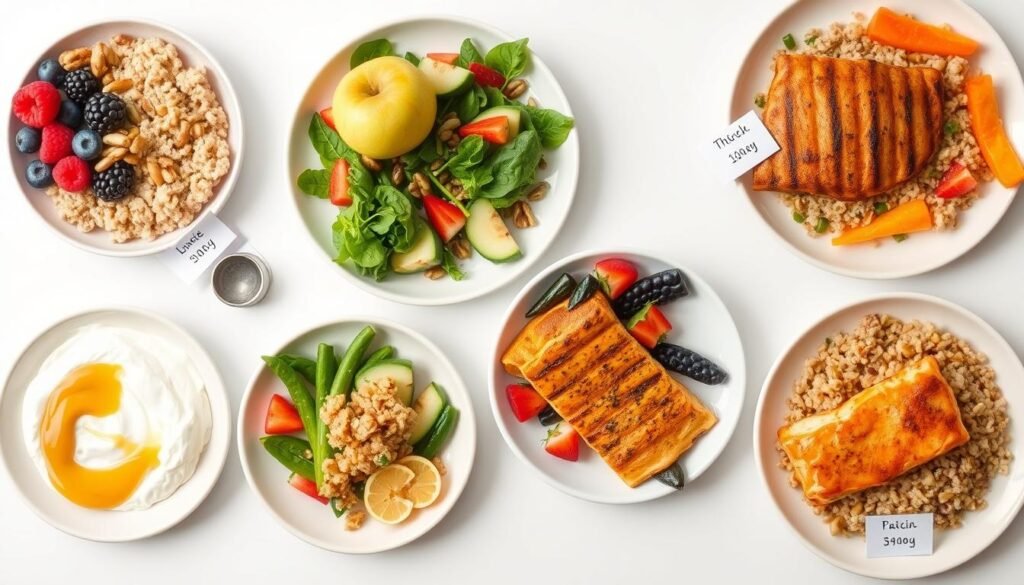
Weight Loss Plan (1,500 calories)
Breakfast (300 calories): Greek yogurt with berries and a tablespoon of honey
Snack (150 calories): Apple with 1 tablespoon almond butter
Lunch (400 calories): Grilled chicken salad with olive oil dressing
Snack (150 calories): Carrot sticks with hummus
Dinner (500 calories): Baked salmon with roasted vegetables and quinoa
Macros: 35% protein, 30% carbs, 35% fat
Maintenance Plan (2,000 calories)
Breakfast (400 calories): Oatmeal with banana, nuts, and milk
Snack (200 calories): Protein smoothie with fruit
Lunch (600 calories): Turkey wrap with avocado and side salad
Snack (200 calories): Greek yogurt with granola
Dinner (600 calories): Stir-fry with lean beef, vegetables, and brown rice
Macros: 25% protein, 50% carbs, 25% fat
Muscle Gain Plan (2,500 calories)
Breakfast (500 calories): Eggs, whole grain toast, avocado
Snack (300 calories): Protein shake with banana and peanut butter
Lunch (700 calories): Chicken, sweet potato, and broccoli
Snack (300 calories): Cottage cheese with pineapple and nuts
Dinner (700 calories): Salmon, quinoa, and roasted vegetables
Macros: 30% protein, 45% carbs, 25% fat
Portion Control and Hydration
Portion Control Tips
- Use smaller plates to create the illusion of fuller portions
- Measure foods until you can accurately estimate portions
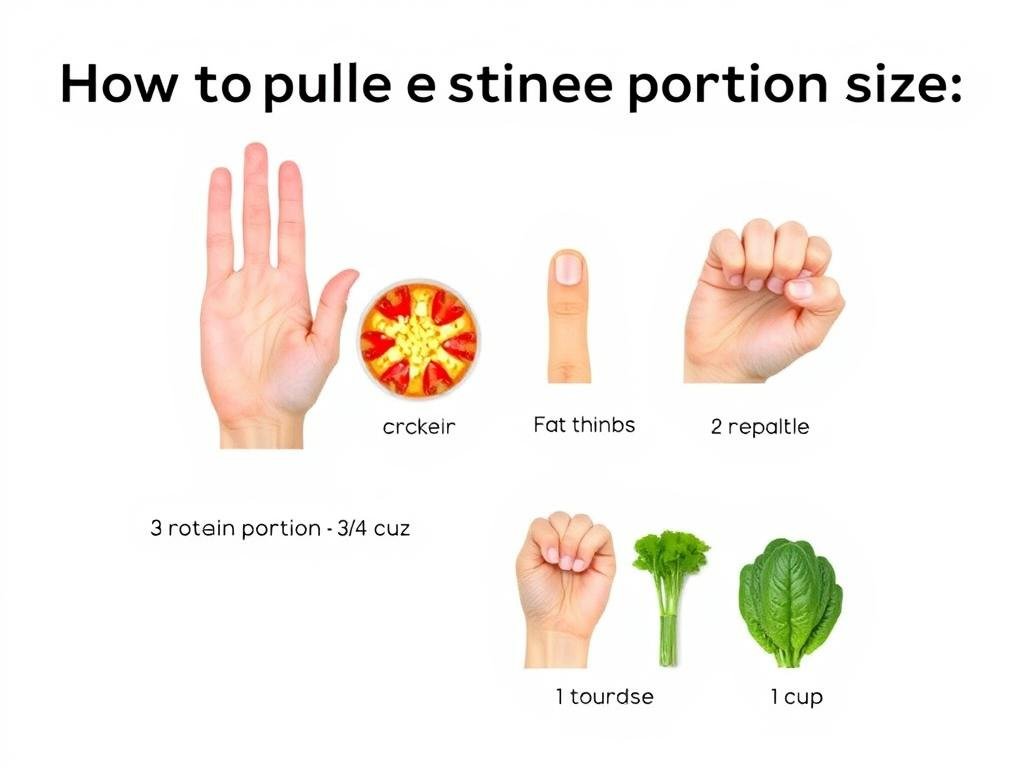
- Use your hand as a portable measuring tool:
- Palm = protein portion (3-4 oz)
- Fist = vegetable portion (1 cup)
- Cupped hand = carb portion (1/2 cup)
- Thumb = fat portion (1 tablespoon)
- Pre-portion snacks instead of eating from packages
- Fill half your plate with vegetables
Hydration Guidelines
Proper hydration is essential for weight management:
- Aim for 8-10 cups (64-80 oz) of water daily
- Drink a glass of water before meals to promote fullness
- Replace sugary beverages with water or unsweetened tea
- Increase intake during hot weather or intense exercise
- Monitor urine color (pale yellow indicates good hydration)
Drinking water can boost metabolism by 24-30% over 1-1.5 hours, helping you burn more calories.
Create Your Personalized Meal Plan
Get a customized meal plan based on your calorie needs, food preferences, and weight goals. Our tool will help you balance your macronutrients and split your meals optimally throughout the day.
Actionable Tips for Successful Weight Management

Beyond understanding how to calculate BMI and calories for weight management, implementing practical strategies is key to long-term success. Here are evidence-based tips to help you achieve and maintain your weight goals.
Foods to Prioritize and Avoid
Foods to Prioritize
- Lean proteins: Chicken, turkey, fish, tofu, legumes, and low-fat dairy help build muscle and increase satiety
- Fiber-rich foods: Vegetables, fruits, whole grains, and legumes promote fullness and digestive health
- Healthy fats: Avocados, nuts, seeds, and olive oil support hormone production and nutrient absorption
- Complex carbohydrates: Sweet potatoes, quinoa, brown rice, and oats provide sustained energy
- Water-rich foods: Cucumbers, watermelon, strawberries, and lettuce help with hydration and fullness
Foods to Limit
- Processed foods: Packaged snacks, frozen meals, and fast food often contain hidden calories, sodium, and unhealthy fats
- Added sugars: Sodas, candy, baked goods, and many breakfast cereals can spike blood sugar and increase cravings
- Refined carbohydrates: White bread, pasta, and rice lack fiber and nutrients found in whole grain alternatives
- Alcohol: Contains empty calories and can lower inhibitions, leading to poor food choices
- Trans fats: Found in some fried foods, baked goods, and margarine, these can increase inflammation and heart disease risk

Exercise Recommendations Based on Weight Goals
For Weight Loss
Cardio: 150-300 minutes of moderate-intensity activity per week
- Brisk walking (30 minutes, 5 days/week)
- Cycling (30-45 minutes, 3-4 days/week)
- Swimming (30 minutes, 3 days/week)
Strength Training: 2-3 sessions per week
- Full-body circuit training
- High-rep, moderate weight exercises
- Minimal rest between sets
HIIT: 1-2 sessions per week (20-30 minutes)
For Maintenance
Cardio: 150 minutes of moderate-intensity activity per week
- Mix of activities you enjoy
- Focus on consistency rather than intensity
- Include active hobbies (hiking, dancing, sports)
Strength Training: 2 sessions per week
- Maintain muscle with full-body workouts
- Moderate weights, 8-12 repetitions
- Focus on major muscle groups
Flexibility: 2-3 sessions per week (yoga, stretching)
For Muscle Gain
Cardio: 75-150 minutes of moderate-intensity activity per week
- Short sessions to maintain cardiovascular health
- Low-impact options to preserve energy for lifting
- Consider walking or light cycling
Strength Training: 3-5 sessions per week
- Split routines targeting specific muscle groups
- Progressive overload (gradually increasing weight)
- Moderate to heavy weights, 6-12 repetitions
- Longer rest periods between sets (1-3 minutes)

Tracking Progress and Staying Motivated
Effective Tracking Methods
- Food journal: Record everything you eat and drink to increase awareness
- Digital apps: Use calorie tracking apps that also monitor macronutrients
- Weekly weigh-ins: Measure at the same time of day, wearing similar clothing
- Body measurements: Track waist, hips, chest, and other areas monthly
- Progress photos: Take pictures in similar lighting and poses every 2-4 weeks
- Fitness benchmarks: Record improvements in strength, endurance, or flexibility
Staying Motivated
- Set SMART goals: Specific, Measurable, Achievable, Relevant, Time-bound
- Find an accountability partner: Share goals with someone who will support you
- Celebrate non-scale victories: Improved energy, better sleep, clothes fitting differently
- Plan for obstacles: Develop strategies for challenging situations like travel or holidays
- Reward yourself: Create non-food rewards for reaching milestones
- Focus on consistency: Aim for 80-90% adherence rather than perfection

“Weight loss is not a sprint; it’s a marathon. Small, consistent changes lead to lasting results.”
Track Your Progress
Use our comprehensive tracking tools to monitor your weight, measurements, and food intake. Stay motivated by seeing your progress over time.
Personalizing Your Approach for Long-Term Success

Understanding how to calculate BMI and calories for weight management is just the beginning of your health journey. The most successful approach is one that you can maintain long-term, adapting to your unique preferences, lifestyle, and body’s needs.
Remember that weight management is highly individual. What works for one person may not work for another. Be patient with yourself and willing to adjust your approach based on your results and how you feel. Focus on creating sustainable habits rather than seeking quick fixes.
Regular reassessment is key. As your weight changes, so will your calorie needs. Recalculate your BMI and calorie requirements every few months or whenever you experience significant changes in weight or activity level. This ongoing adjustment ensures you continue making progress toward your goals.
Finally, consider working with healthcare professionals like registered dietitians, personal trainers, or physicians who can provide personalized guidance based on your specific health needs and goals. Their expertise can help you navigate challenges and optimize your approach for the best results.
Your Next Steps:
- Calculate your BMI to understand your current weight status
- Determine your daily calorie needs based on your weight goal
- Create a balanced meal plan that fits your lifestyle
- Implement an exercise routine appropriate for your goals
- Track your progress and make adjustments as needed
Remember that small, consistent changes lead to lasting results. Start today, and be proud of each step you take toward a healthier you!
Begin Your Health Journey Today
Access all our calculators, meal plans, and tracking tools in one place to simplify your weight management journey.
Frequently Asked Questions
How accurate is BMI for assessing my health?
BMI is a useful screening tool but has limitations. It doesn’t distinguish between muscle and fat mass, so athletic individuals may have a higher BMI despite being healthy. It also doesn’t account for age, gender, ethnicity, or fat distribution. Use BMI as one of several health indicators, alongside waist circumference, body fat percentage, and other clinical assessments.
How quickly can I expect to see weight loss results?
Healthy, sustainable weight loss typically occurs at a rate of 1-2 pounds per week. However, you may experience faster weight loss in the beginning, especially if you have more weight to lose. Remember that weight fluctuates daily due to factors like water retention, so weekly or bi-weekly measurements provide a more accurate picture of your progress.
Do I need to count calories forever to maintain my weight?
Not necessarily. Calorie counting is an educational tool that helps you understand portion sizes and the energy content of different foods. Many people find that after several months of tracking, they develop a better intuitive sense of appropriate portions and can maintain their weight without strict counting. However, periodic tracking can be helpful if you notice weight creeping back.
Can I lose weight without exercise?
Yes, weight loss can occur through dietary changes alone since calorie intake has a more significant impact on weight than exercise. However, combining diet with exercise provides numerous benefits beyond weight loss, including improved muscle tone, cardiovascular health, mood, and long-term weight maintenance. Even modest activity like walking can enhance your results.
How do I calculate calories for homemade meals?
For homemade meals, calculate the total calories of all ingredients used, then divide by the number of servings. Many recipe websites and apps can automatically calculate nutrition information for your recipes. Alternatively, you can weigh or measure each ingredient and look up its calorie content. While this requires more effort initially, you’ll only need to calculate once for recipes you make regularly.